A South Florida law firm spent two years building their Google Business Profile the “right way.” They had 200+ reviews, a complete profile, and weekly posts. They ranked in the top three of the local pack for every major keyword. And yet, by late 2025, their phone calls from Google had dropped 23% year over year.
They are not alone. Sterling Sky’s analysis of 179 Google Business Profiles across 34 law firms found the same pattern: calls declining even for businesses that maintain top local pack positions. Rankings stayed steady. Leads did not.
The reason is simple but uncomfortable: Google Business Profile optimization in 2026 is a fundamentally different game than it was even 18 months ago. AI Overviews now appear in over 40% of search queries. AI-generated local packs show 68% fewer businesses than traditional map results. Local pack ads have exploded from 1% to 22% of mobile search results in a single year. The organic local visibility window is shrinking fast, and the businesses that treat GBP optimization as a “set it and forget it” task are watching their leads evaporate.
This guide covers what actually works in 2026, backed by data from Whitespark, BrightLocal, Sterling Sky, and Local Falcon. No generic “complete your profile” advice. If you already know the basics, skip ahead to the sections on AI, review velocity, and the website-GBP connection that most businesses and even most agencies are still missing.
Forty-six percent of all Google searches have local intent. That translates to roughly 97 billion local searches every month. And 76% of people who search for something “near me” visit a business within 24 hours.
Those numbers have been cited for years. What has changed is how Google serves those results.
Three forces are squeezing organic local visibility simultaneously:
1. AI Overviews are compressing the local pack. Local Falcon’s 2025 whitepaper found that AI Overviews appear in 40.2% of queries. When they include a local pack, that pack shows only 32% as many unique businesses as traditional map results. In 88% of the 322 markets Sterling Sky analyzed, the number of businesses visible to searchers “plummeted.” If you are not in the top two or three, you are functionally invisible in AI-generated results.
2. Local pack ads have exploded. Sterling Sky’s 2026 State of Local SEO report found that local pack ads appeared in 22% of mobile search reports by January 2026, up from just 1% at the start of 2025. That is a 22x increase in paid competition for map pack real estate in one year.
3. Alternative platforms are fragmenting search behavior. Forty-five percent of consumers now use ChatGPT or other AI tools for local business recommendations, up from just 6% the year before. Apple Maps usage nearly doubled from 14% to 27%. Your GBP is no longer the only local discovery channel, but it remains the most important one.
The bottom line: fewer organic spots, more paid competition, and consumers discovering businesses through channels that pull from your GBP data whether you optimize it or not. Getting this right is no longer optional.
According to the 2026 Whitespark Local Search Ranking Factors survey of 47 industry experts scoring 187 factors, your primary GBP category is the single most important local pack ranking factor. Not reviews. Not links. Not proximity. Your primary category.
GBP signals overall account for approximately 32% of local pack rankings. Here is the full breakdown:
| Ranking Factor Category | Approximate Weight |
|---|---|
| GBP Signals (category, services, description, photos, posts) | 32% |
| Link Signals (domain authority, local backlinks) | 29% |
| Review Signals (volume, velocity, recency, sentiment) | 20% |
| On-Page Signals (NAP, schema, mobile optimization) | 14% |
| Behavioral Signals (CTR, click-to-call, direction requests) | 11% |
Eight of the top ten Local Pack factors come directly from your Google Business Profile. That means the majority of what determines your local visibility is within your direct control.
Here is how to set up each element for maximum impact:
Your primary category should be the most specific match for your core service. Google offers over 4,000 business categories, and specificity matters. “Personal Injury Attorney” will outrank “Lawyer” for personal injury queries every time. “Emergency Plumber” beats “Plumbing Service” for urgent searches.
Add every relevant secondary category. A roofing company might add “Roof Repair Service,” “Gutter Cleaning Service,” and “Siding Contractor.” Each secondary category opens new query pathways in the local pack. Do not add categories that do not match real services you offer. Google’s verification systems have become sophisticated enough to flag mismatches.
Your 750-character business description does not directly influence rankings, but it does influence click-through rate, and behavioral signals account for 11% of local pack ranking. Write it for humans, not algorithms. Lead with what makes your business different. Include your service area naturally. Avoid keyword stuffing.
This is where most businesses leave significant value on the table. The GBP Services section allows you to list every service with a description. Google uses this data to match your profile to specific queries. A plumber who lists “tankless water heater installation,” “sewer line repair,” and “drain cleaning” separately will match more queries than one who just lists “plumbing services.”
Critically, Google now cross-references your GBP services against your website content. If your GBP lists “emergency AC repair” but your website has no page or section covering emergency AC service, Google sees a mismatch. We will cover this alignment in detail later in the article.
Your business Name, Address, and Phone number must be identical everywhere: your GBP, your website, your structured data markup, your directory listings, and your social profiles. This is not new advice, but the stakes are higher now. Google’s AI systems cross-reference NAP data across sources more aggressively than before. Even small variations like “Street” vs. “St.” or “(954)” vs. “954” can create friction.
For businesses serving multiple cities, the approach depends on your model. A single-location business should list its physical address and define service areas. A multi-location business needs a separate, verified GBP for each physical location. Do not create separate profiles for service areas where you do not have a staffed office. Google actively suspends profiles that violate this guideline.

Most GBP optimization guides mention photos in passing. Here is why you should treat them as a primary ranking strategy: Google’s Vision AI now scans and interprets the content of your photos as a ranking signal.
A plumber who uploads a photo of a tankless water heater installation is more likely to rank for “tankless water heater installation” without ever using that phrase in their profile text. Google’s image recognition identifies the equipment, the work context, and the service type. This means your photo library is no longer just a trust signal for potential customers. It is a ranking signal that Google reads as semantic content.
The data backs this up. According to Birdeye’s State of Google Business Profiles report, businesses with over 100 photos receive 42% more direction requests and 35% more website clicks than those with fewer photos.
Here is what to upload and how often:
Weekly uploads are the minimum. Businesses that go 30 or more days without adding new photos or posts see measurable drops in GBP impressions. Treat photo uploads like content publishing: it needs a consistent cadence.
Prioritize real work over stock images. Google’s Vision AI can distinguish between stock photography and original images. Upload photos of actual completed projects, your team on the job, your physical location, and your equipment. Before-and-after sequences are particularly effective because they demonstrate capability and build trust simultaneously.
Add descriptions with local context. Photo descriptions are not a major ranking factor on their own, but they contribute to the overall relevance signal. “Kitchen remodel completed in Coral Springs, FL” is better than “Kitchen photo.”
Cover every category. GBP organizes photos into categories: interior, exterior, team, at work, and products. Upload at least three photos per category. Google uses the completeness of your photo library as a quality signal.
For South Florida businesses, there is an added advantage. Many competitors in this market still rely on stock photos or have empty photo libraries. A business that commits to weekly photo uploads of real work will visually stand out in local pack results where competitors show generic or outdated images. This directly impacts click-through rate, which feeds the behavioral signals that account for 11% of ranking.

Review signals now account for approximately 20% of local pack ranking factors, up from 16% in 2023. But the way reviews influence rankings has changed in ways that most businesses do not understand.
Review recency is the most underrated local ranking factor. Whitespark’s research calls it exactly that. A business receiving two to three reviews per week will outperform a competitor with 500 total reviews but nothing new in three months. Google wants to see that customers are actively choosing your business right now, not that they did five years ago.
The consumer data reinforces this. BrightLocal’s 2026 Local Consumer Review Survey found:
The bar is rising fast. Ratings that were good enough last year may not be in 2026.
Nineteen percent of consumers now expect a same-day response to their review, up from just 6% the previous year. Eighty-one percent expect a response within a week. Businesses that do not respond to reviews are not just missing a customer service opportunity. They are sending a signal to both Google and potential customers that the business is not actively managed.
Here is a stat that should change your review strategy: consumers now use an average of six review sites when evaluating a local business. Google is the most important, but it is not the only one that matters. Yelp, Facebook, industry-specific directories like Avvo for attorneys or Houzz for contractors, and the Better Business Bureau all contribute to your overall online reputation.
More importantly, Google’s AI systems pull sentiment data from across the web. A business with strong reviews on Google but poor ratings on Yelp sends mixed signals that AI will notice and potentially reflect in how it recommends your business.
For a comprehensive approach to managing reviews across all platforms, online reputation management should be part of your overall strategy, not an afterthought.
Google Business Profile posts are one of the few direct content channels you control within GBP. And their impact on visibility is more measurable than most businesses realize.
The critical threshold: businesses that go 30 or more days without posting or adding new photos see dramatic drops in GBP impressions. This is not theory. It has been documented across multiple studies and confirmed by practitioners managing hundreds of profiles. Your GBP has a freshness clock, and when it expires, Google assumes the business is less active and relevant.
Here is the posting cadence that works in competitive markets:
Minimum: one post per week. This keeps your profile above the freshness cliff and maintains the “What’s New” section on your profile.
Optimal: two to three posts per week for businesses in competitive local markets. GBP posts expire from the prominent “What’s New” position after approximately seven days. Posting twice a week ensures there is always a fresh post visible when someone views your profile.
Timing matters for B2B services. Posts published Tuesday through Thursday between 9 AM and 3 PM see higher engagement for professional services. Restaurants and entertainment businesses perform better with evening and weekend posts.
One logistical improvement worth noting: Google added native post scheduling in late 2025. You no longer need a third-party tool to schedule posts in advance. This removes one of the biggest friction points that kept businesses from maintaining a consistent posting cadence.

This section is the most important part of this guide. Everything above still matters, but AI is changing how it matters and adding entirely new dimensions to GBP optimization.
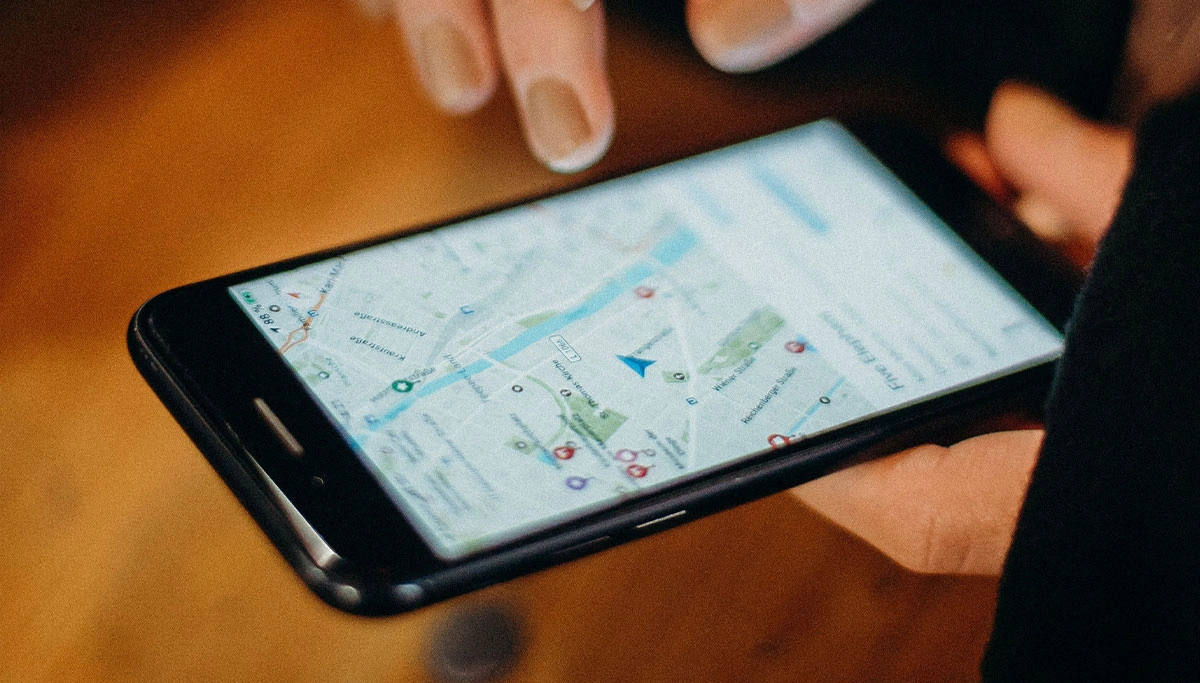
Google’s Gemini AI now powers an “Ask Maps” feature that automatically answers questions about your business by scanning three sources: your GBP profile, your website, and your reviews. The old strategy of manually seeding your Q&A section with pre-written questions and answers is becoming less relevant. What matters now is ensuring that the right information exists across all three sources for Gemini to find and synthesize.
If a potential customer asks “Does this plumber offer financing?” on Maps, Gemini will look for that answer in your GBP services, your website content, and even mentions of financing in your reviews. If the answer exists nowhere, Gemini either says it cannot find the information or worse, pulls an inaccurate answer from a third-party source.
The action item: audit every common question your customers ask and make sure the answer exists in at least two of the three sources (GBP profile, website, reviews). Do not rely on any single source.
The 2026 Whitespark survey added AI Search Visibility as a ranking factor category for the first time. The key finding: AI does not recommend brands that are inconsistent or disconnected from local context.
This means mismatches between your GBP and your website hurt more than ever. If your GBP says you serve Fort Lauderdale but your website only mentions Tamarac, AI systems flag the inconsistency. If your GBP lists “commercial HVAC repair” but your website has no page about commercial HVAC, that gap undermines your authority for that service – it is exactly the kind of alignment a dedicated HVAC SEO company builds into your site structure.
Proximity, which has always been a foundational local ranking factor, matters less in AI Overviews than in traditional local packs. Local Falcon found effectively no correlation between business distance and ranking position within AI-generated local results. This is significant: it means a well-optimized profile can compete against businesses that are physically closer to the searcher, as long as the profile demonstrates superior relevance and authority.
Google’s AI does not just count your stars. It reads and interprets the sentiment of your reviews. Patterns in what reviewers say about your business influence how AI summarizes and recommends you.
If multiple reviewers mention “fast response time” or “fair pricing” or “explained everything clearly,” those themes become part of your AI-generated business summary. Conversely, repeated complaints about specific issues will surface in AI recommendations even if your overall star rating is high.
This makes review quality, not just quantity, a direct input to how AI represents your business to potential customers.
This is the optimization layer that separates businesses that rank from businesses that rank and convert. Google increasingly treats your GBP and your website as two parts of a single entity. When they align, both perform better. When they do not, both suffer.
Every service listed in your GBP should have a corresponding page or section on your website. Google’s systems verify this. If your GBP lists “estate planning” as a service, your website needs an estate planning page with substantive content, not just a bullet point on a general services page.
For businesses in Fort Lauderdale, Boca Raton, Coral Springs, and other South Florida cities, this also means your location pages should reference the same services your GBP lists for that area. A Miami-focused service page that mirrors your Miami GBP services creates the consistency signal that both traditional rankings and AI systems reward.
Your website’s schema markup should match your GBP information exactly. LocalBusiness or ProfessionalService schema should include the same business name, address, phone number, service areas, and aggregate rating that appears on your GBP. When Google sees identical structured data on your website and your GBP, it strengthens the connection between the two and increases confidence in your business entity.
The sameAs property in your schema should link to your GBP Maps URL, your social profiles, and any other verified business listings. This helps Google verify your business identity across the web.
Look at the queries driving impressions to your GBP in Search Console. Then look at whether your website has content that addresses those queries in depth. If your GBP gets impressions for “emergency roof repair Fort Lauderdale” but your website has no content specifically about emergency roofing services in Fort Lauderdale, you are leaving conversions on the table.
The fix is straightforward: create location-specific content that mirrors and expands on what your GBP communicates. Your GBP is the summary. Your website is the proof.

We have published a separate in-depth guide on 18 common local SEO mistakes. Here are the GBP-specific errors we see most frequently when auditing South Florida businesses:
Using a generic primary category. “Marketing Agency” instead of “SEO Agency.” “Doctor” instead of “Dermatologist.” The primary category is the single most important ranking factor. Being specific is not optional.
Ignoring the Services section. Many businesses fill out their description but leave Services empty. This is like having a storefront with no menu. Google cannot match you to specific service queries if you have not told it what you offer.
Inconsistent hours. If your GBP says you close at 5 PM but your website says 6 PM, or if you do not update holiday hours, Google reduces confidence in your listing accuracy. Update hours in both places simultaneously, every time.
Enabling messaging without monitoring it. Google tracks your messaging response time. If you enable the messaging feature but do not respond quickly, it can actually hurt your profile’s performance. Either commit to responding within a few hours or turn messaging off.
Stock photos instead of real images. Google’s Vision AI can distinguish stock photography from original content. Stock photos do not provide the semantic ranking signals that real project photos do, and customers can tell the difference. Use real photos or none at all.
Posting sporadically. One post every two months is worse than no posts at all in some ways, because it signals inconsistency rather than inactivity. If you cannot commit to at least one post per week, establish a system to maintain that cadence before starting.
Use this checklist to audit your current profile and identify gaps:
| Action Item | Priority | Frequency |
|---|---|---|
| Set most specific primary category | Critical | One-time (review quarterly) |
| Add all relevant secondary categories | Critical | One-time (review quarterly) |
| Complete every field in Services section | Critical | Review monthly |
| Verify NAP matches website and directories | Critical | Review monthly |
| Upload original photos | High | Weekly (minimum) |
| Publish GBP posts | High | 2-3x per week |
| Respond to all reviews | High | Within 24-48 hours |
| Audit website-GBP service alignment | High | Monthly |
| Update business hours (including holidays) | Medium | As needed |
| Review and update business description | Medium | Quarterly |
| Check schema markup matches GBP data | Medium | After any website change |
| Audit common customer questions across GBP, site, and reviews | Medium | Quarterly |
| Review GBP Insights for performance trends | Medium | Monthly |
Most profile changes (category updates, service additions, description changes) are reflected within one to two weeks. Photo and post impacts accumulate over time, with noticeable changes typically appearing after four to six weeks of consistent activity. Review velocity improvements can influence rankings within two to four weeks. The overall trajectory of a comprehensive GBP optimization usually becomes clear within 90 days.
GBP posts are part of the 32% weight that GBP signals carry in local rankings. They are not the strongest individual signal, but their impact is measurable, especially through freshness and behavioral metrics. More importantly, posts keep your profile active, which prevents the impression drops associated with the 30-day inactivity cliff. They also feed content to Google’s AI systems for “Ask Maps” answers.
There is no magic number because it depends on your market and competitors. However, the data shows that review velocity (how frequently you receive new reviews) matters more than total count. A business with 50 reviews getting two to three new reviews per week will typically outrank a competitor with 300 reviews that stopped getting new ones three months ago. Focus on building a consistent flow rather than hitting a specific number.
Yes, respond professionally and briefly, then flag the review for removal through GBP’s reporting tools. Do not engage in a public argument. Google’s review moderation has improved, but removal is not guaranteed. A professional response to a fake review demonstrates to potential customers that you take your reputation seriously.
You can set multiple service areas on a single GBP, but you cannot effectively rank in the local pack for cities far from your physical location. Google uses proximity as a foundational ranking factor (though it matters less in AI Overviews). For businesses that genuinely serve a wide area, the best approach is a strong GBP for your physical location combined with location-specific pages on your website for each city you serve. If you have a physical presence in multiple cities, create a separate verified GBP for each location.
For a single-location business, the native GBP dashboard (including the new post scheduling feature) is sufficient. For multi-location businesses or agencies managing multiple profiles, third-party tools like BrightLocal, Whitespark, or Local Falcon provide value through bulk management, rank tracking, and competitive analysis. The investment usually pays for itself once you are managing more than five profiles.
GBP optimization in 2026 is not about tricks or hacks. It is about consistent, authentic presence across a profile that Google’s AI systems can trust and recommend. The businesses that post regularly, respond to reviews quickly, upload real photos of real work, and align their website with their GBP data are the ones that survive the AI compression of local search results.
The competition for local visibility is intensifying. Fewer organic spots, more ads, and AI systems that aggressively filter for quality and consistency mean that half-measures no longer work. But the flip side is also true: businesses that commit to doing this well have a significant advantage, because most of their competitors will not.
If your Google Business Profile is not generating the calls and leads it should, or if you are not sure whether your GBP and website are properly aligned, request a free SEO audit from Connectica. We specialize in Google Business Profile optimization for South Florida businesses and can identify exactly where your profile is falling short.
Stay up to date on industry news and receive promotions & special offers.
Don't worry we hate spam as much as you do.
Connectica LLC
8499 West Commercial Blvd
Tamarac,
FL 33351
Toll Free: 1-877-816-2259
Local: 954-282-1698

This site is protected by reCAPTCHA · Privacy Policy · Terms of Service